Blog
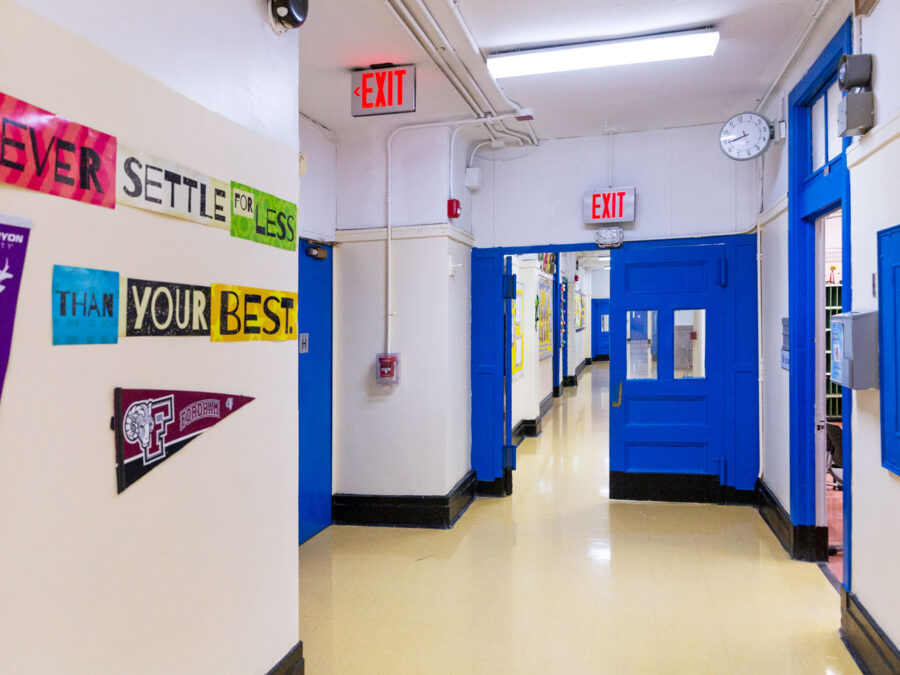
At Fort Hamilton High School, educators are laser focused on getting students through the school doors every morning. With over 4,000 students at the school, identifying and grouping causes of chronic absenteeism has been crucial to this effort, and educators are relying on student voice to lead the way. “Every one of these chronically absent students is different,” said Nicole Pellegrino, a school counselor at Fort Hamilton, “Jason is unaware of his weekly absences while Fatima* helps mom with her meds.”
Educators can now distinguish between circumstantial absences (e.g., Covid, suspension, long-term travel, bereavement) and consistent weekly absenteeism by analyzing attendance over time in the Portal, a student planning and school improvement tool created in-house by New Visions that aligns robust data and actionable planning. Students who generally maintain strong attendance, but occasionally dip are likely facing circumstantial challenges. In contrast, students missing an average of 1 day per week throughout the school year present a different challenge. Traditionally, schools have applied a similar strategy for both groups, despite their differences.
Chronic absenteeism is a national issue: the New York Times recently reported that “perhaps no issue has been as stubborn and pervasive as a sharp increase in student absenteeism, a problem that cuts across demographics and has continued long after schools reopened.” Fort Hamilton High School is one of more than 25 schools in the New Visions Affinity network that is focused on decreasing chronic absenteeism in their school.

For some of these schools, it’s been about identifying the “butterflies” – a term used to describe students who want to be at school, but consistently miss a day or two of school weekly. Butterflies’ attendance is often impacted by circumstance: they worked late on Wednesday night or had a bad headache on Friday morning.
Decreasing chronic absenteeism isn’t a new battle, but there have been new learnings from this year’s work. “We’ve learned that setting a goal around a percentage or even around coming to school a certain amount is too abstract for students and families,” explained Jon Green, a New Visions coach, “We’ve started to think about attendance as consistency week to week.”
This focus on weekly attendance helps students see the connection between coming to school each week and absorbing the academic instruction that happens on a weekly basis. “There has to be more of a connection between the learning experience that requires kids to be in school: labs, debates, on-demand writing,” said Jon Green, “The signals that kids have received during Covid and over the past few years have been antithetical to that.”

What motivates butterflies to come to school? Fort Hamilton High School, alongside 7 other New Visions partner schools, is testing out a weekly 1:1 check-in strategy that focuses on improving the consistency of weekly attendance with zero absences. The basic elements of the strategy include:
- In the Portal, identify a focal group of chronically absent students, and assign them to a point person who is on a team that meets weekly to review qualitative and quantitative attendance, social emotional learning (SEL), and academic data.
- Convene an initial 5-10 minute conference between the student and the point person. During this meeting, the point person reviews a Portal-generated attendance student snapshot. This data is used to highlight strengths, diagnose causes for patterns of behavior (e.g., a higher tally of absence on Wednesdays), and lay the groundwork for the upcoming week of school, to proactively identify and mitigate possible challenges that result in absence.
- After this initial conference, the student and point person meet informally weekly to check in on the prior week’s attendance data (“I see you made it to school last Wednesday – nice work!”) and determine a support plan for the current school week in order to hit all 5 days without an absence.
- The point person then uses the Portal Notes function to elevate student voice by documenting check-in data that provides a better portrait of the strengths, challenges, and changes that kick up week to week. These data points are raised alongside the quantitative data during the weekly team meetings.
These 1:1 check-ins are already proving helpful: the frequency of weekly meetings has started to create relationships around this effort and foster an empathy for this struggle that may make the difference long term. Meredith Phelan, the Assistant Principal of Bronx High School for Law & Community Service, another school in the New Visions Affinity network that is working on decreasing chronic absenteeism, shared: “It never occurred to Aisha that someone cared that much if she came to school or not. Now, when she sees how excited I am that she’s present, her face lights up.”

*Student names have been changed to protect privacy.