Blog

Chronic Absenteeism Remains a National Issue
In April, we wrote about new interventions that a group of schools in the New Visions network have implemented to address chronic absenteeism. New Visions schools aren’t the only ones trying to tackle this issue: this spring, the White House held the Every Day Counts Summit, which gathered state and local education leaders from around the country to collaborate on how to address chronic absenteeism.
Chronic absenteeism disproportionately impacts our most vulnerable students. According to Attendance Works, “Children living in poverty are two to three times more likely to be chronically absent—and face the most harm because their community lacks the resources to make up for the lost learning in school. Students from communities of color as well as those with disabilities are disproportionately affected.”
This issue is urgent, and educators in New York City Public Schools are facing it head on.
Breaking Habits and Overcoming the Odds
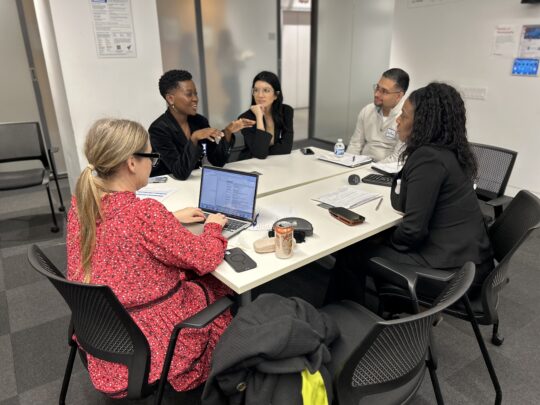
Eight New Visions partner schools have been piloting a weekly 1:1 check-in strategy that focuses on improving the consistency of 100% weekly attendance. As the school year comes to a close, these schools have been able to review trends in their attendance data, elevate their learnings, and prepare for next year.
Three of these schools were facing absenteeism rates that were over 40% in the middle of the school year. For context, the U.S. rate of chronic absenteeism usually hovers around 15%. After the first year of the COVID-19 pandemic, chronic absenteeism in the U.S. exploded, hitting an alarmingly high 31% during School Year 2021-2022.
All three schools with midyear chronic absenteeism rates above 40% experienced the most significant decreases in chronic absenteeism over the remainder of the school year. This is a really positive outcome, especially given how chronic absenteeism tends to increase over the course of the school year. The data for the “butterfly” student population — students who want to be at school, but consistently miss a day or two of school weekly — was even more exciting: 81% of the chronically absent “butterfly” students who received weekly 1:1 check-ins during the spring saw gains in their attendance from either their fall term or the prior school year attendance average.
“It’s really hard to change a habit,” explained Meredith Phelan, the Assistant Principal of Bronx High School for Law & Community Service, “And I think awareness is the first step. Students are usually shocked to learn how many days they have missed.”
This level of detailed attendance tracking is impossible to achieve without the live data stored in the Portal by New Visions. The White House briefing recognized how crucial data tools are, and noted how important it is to be able to “report in real time on student absences by school.” From elevating weekly trends in attendance to flagging students who need attention, the Portal organizes a galaxy of data into coherent and priority-driven views that are easy to access, read, sort, and analyze.
Ms. Phelan explained how the Portal’s attendance report can support these 1:1 check-ins: “the attendance report outlines patterns in a really student- and parent-friendly way, and breaks down trends by month and even by each day of the month. This helps us see whether the student is consistently absent on Mondays, for example, which can drive conversations about understanding student attendance patterns and finding solutions.”
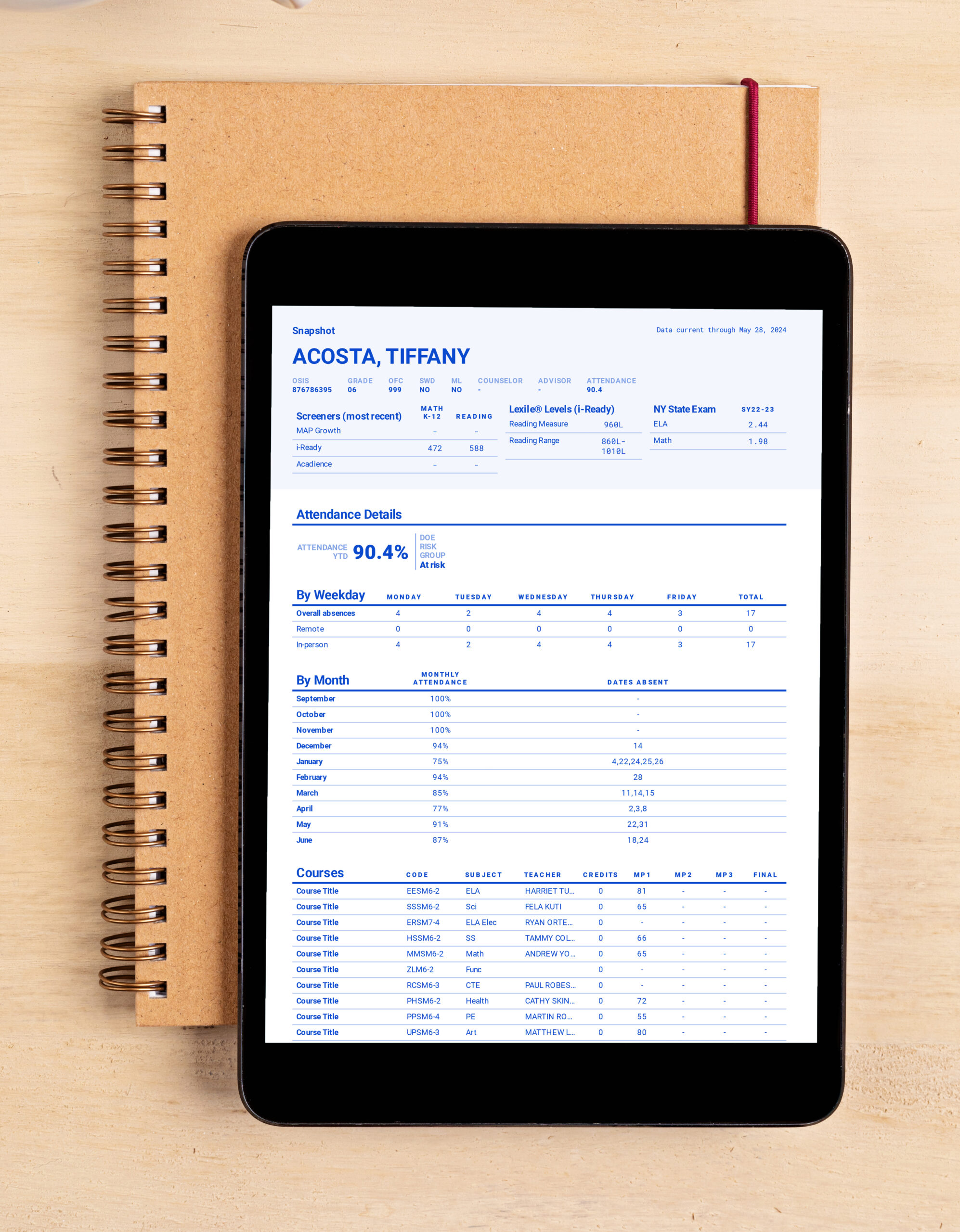
The Portal drives continuous improvement – an element that is critical to these schools’ pilot efforts. The Portal allows attendance teams to see the relationship between their inputs and student outcomes by providing views of 1:1 check-in tallies and outreach notes, alongside current attendance and academic trends.
Beyond the Data: Changing Culture
The data paints a clear picture, but it doesn’t tell the full story. For one, it doesn’t capture the positive feedback loop that has been created around elevating the unit of weekly attendance. This weekly unit makes progress visible in the fog of normal year-to-date attendance, which is a number that’s hard to budge. Attendance teams often struggle to shift the year-to-date attendance percentage, which can feel disheartening.
Coaches and educators are hopeful that this culture shift will lead to longer term positive outcomes. The “butterfly” student who may not have made any attendance gains does now have a consistent relationship with a school staff member. Educators anticipate that these students will come back to school in the fall with an expectation that there will be an adult who will continue to meet with them consistently. “Learning is episodic and developmental,” Jon Green, a New Visions coach, explained, “Students will remember that relationship, and I think that it will have significance for longer term outcomes and changes in behavior.”