We’re working on it!
We are aware that the Annenberg Disease Transmission Simulation is no longer available. We are working fast to get a new option available for you!
Unit Overview
How has evolution shaped how humans and bacteria interact? How can we prevent future outbreaks of bacterial infections?
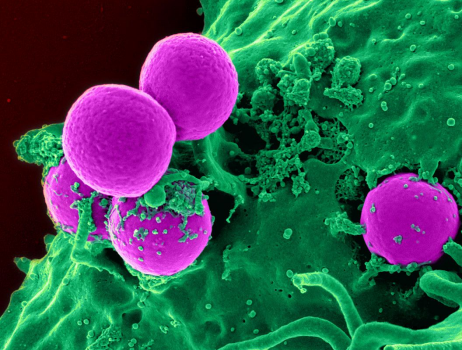
Bacteria are found everywhere: in extreme environments and living in, on, and around us. Some are harmful, some are beneficial, and some barely impact humans at all. Through the forces of natural selection, humans have entered an evolutionary arms race with virulent bacteria that may have lead to a global increase in bacterial infections. At the same time, bacteria have evolved to cooperate both with humans and each other in order to survive and flourish. In this unit, students will consider the factors that impact the rate and scale of evolution and will develop an argument outlining the best strategy to use in preventing a future outbreak. Will human society be able to develop new therapies and technologies in order to fight antibiotic-resistant bacteria and the re-emergence of infectious bacterial diseases?
Performance Expectations:
HS-LS4-2, HS-LS4-3, HS-LS4-4, HS-LS4-5, HS-LS2-8
Unit Storyline
Unit Opening
Why are bacterial diseases increasing globally? How can we prevent new disease outbreaks?
The Black Death
What can we learn about infectious disease transmission from past outbreaks like The Black Death? Why were some people able to survive, when so many people did not?
Antibiotic Resistance
Why aren’t antibiotics working as well as they used to?
The Microbiome
How do humans interact with bacteria? How can we fight bacterial infections using other bacteria?
Cooperation and Survival
How do bacteria interact with each other? How can we leverage those interactions to fight infections?
Unit Closing
How can we best prevent a future outbreak of cholera?
Want the entire unit in one download?
Use our bulk downloader tool to copy the entire unit to your Google Drive.
Assessment
Formative and Summative Assessment
In addition to the unit Performance Task, this unit includes a mid-unit formative task and an end-of-unit transfer task, both designed to serve as individual assessments that are part of a broader assessment system. The Performance Task Organizer and End of Unit Transfer Task complement each other, and by using a combination of each, teachers will assess each PE covered by each unit.
View these assessments or learn more about our assessment system using the buttons below.
A collection of printable materials required for activities, rubrics, and work samples for the unit.