Blog

Associate Director of Partnerships
New Visions for Public Schools
Picture a biology classroom where students wrestle with a real phenomenon and leave the lesson seeing science as something they do. What makes that experience possible isn’t just the curriculum on the page. It’s everything that surrounds it. In my experience teaching, coaching, and designing professional learning for science, I’m fascinated by the way the ecosystem supporting curriculum implementation contributes directly to the actual student experiences.
For the past five years, New Visions for Public Schools has partnered with NYC Public Schools’ Core Curriculum to support high school science. Together, we’ve treated curriculum adoption not as a technical event but as an adaptive process, one that builds a resilient professional learning ecosystem capable of sustaining deep instructional shifts at scale. We’ve supported leaders to design learning environments, rather than just manage a rollout. We have seen this change the way learners experience science, and I want to share a distillation of how an ecosystem approach actually works.
Here are three shifts that support the successful enactment of an instructional vision through an ecosystem approach:
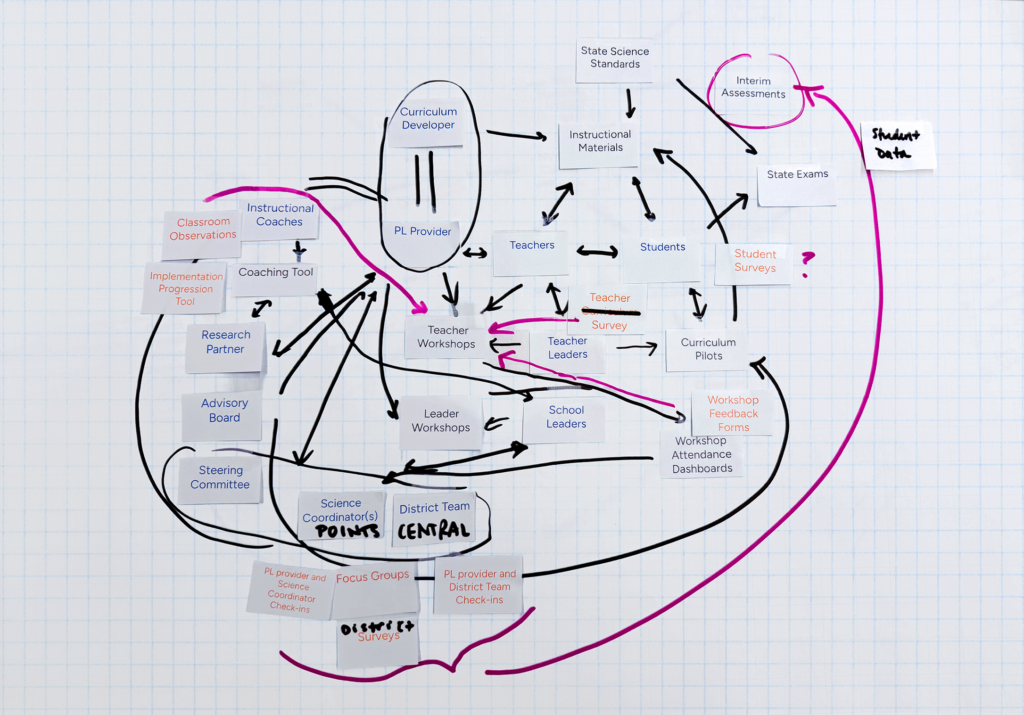
1. Mapping the Ecosystem as a Network of Relationships
District teams often have a clear vision for science: they want to see student-centered, exciting instruction in every classroom. Achieving that vision requires more than a training schedule; it requires mapping the dynamic relationships between people, resources, and data. When we view professional learning as an ecosystem, we move away from isolated events and toward a model driven by:
- Active Stakeholders: Identifying the distinct, overlapping roles of teacher leaders, district administrators, and school-based supervisors. Scaling fails when these roles operate in silos.
- Interdependent Resources: Ensuring that standards, assessments, and graduation requirements are not just aligned but actively integrated into the daily pedagogical goals of teachers.
- Strategic Feedback Loops: Utilizing iterative listening through surveys, classroom inter-visitations, and advisory boards to ensure the system responds to the real-time puzzles of practice that arise in the classroom.
2. Cultivating Integrity Over Rigid Fidelity
A persistent tension in scaling is the demand for fidelity. However, research-based implementation suggests that integrity to design is more sustainable than scripted compliance. (Read more in my colleague Kiran Purohit’s blog post with Illustrative Mathematics!) Leadership capacity-building must focus on helping administrators understand the why behind instructional moves.
When leaders are equipped with “Look-For” guides calibrated to specific design principles, such as three-dimensional learning in science, or disciplinary literacy in any content area, they can provide coaching that empowers teachers to make responsive, professional decisions without losing the rigor of the materials. This shift acknowledges teachers as professionals, not just delivery mechanisms for a product.
3. Building a Multi-Year Plan for Scaling Over Time
Scaling curriculum implementation takes time and persistence. A robust model recognizes distinct phases of growth:
- The Consensus Phase (Year 0): Building the enabling conditions; a phase when stakeholders agree on the vision before students experience a single lesson.
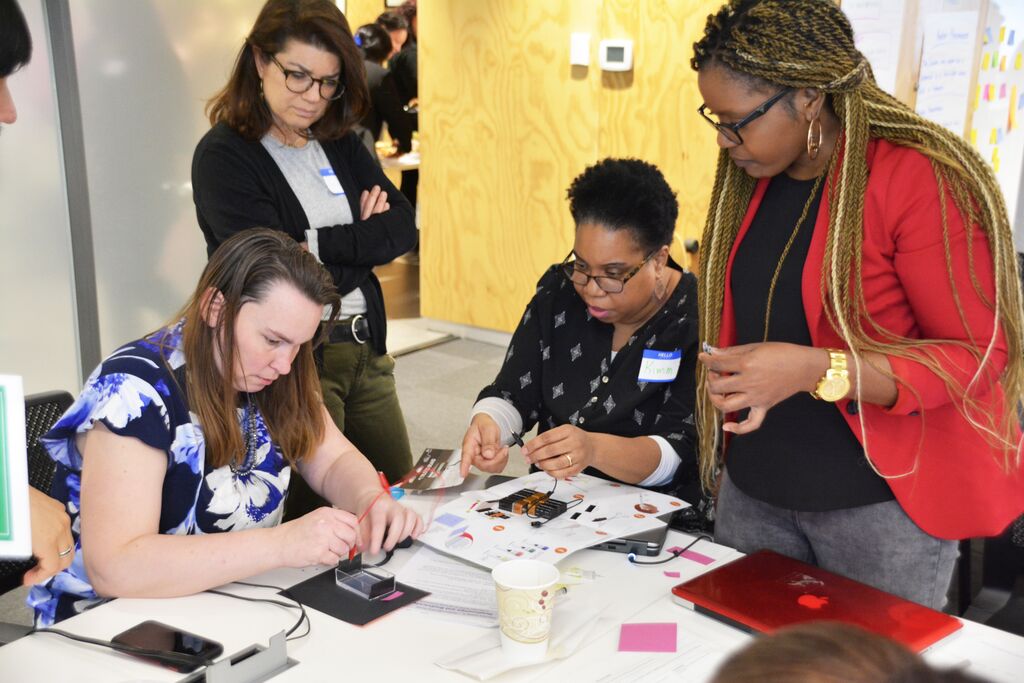
- The Immersion Phase: Utilizing student-hat experiences where educators navigate the curriculum as learners. This builds the empathy and content knowledge necessary to handle the productive struggle students will eventually face.
- The Sustainability Phase: Shifting ownership from external providers or district offices to school-based professional learning communities. Here, the work becomes job-embedded, focusing on analyzing student work and refining practice in real time.
A Vision for Responsive Leadership
The ultimate goal of scaling is not a finished, static product. Instead, it is the creation of a system that is responsive by design.
When we stop trying to manage a rollout and start designing a professional learning ecosystem, we create a culture where high-quality instruction is a systemic inevitability.
Through our Navigate platform of services, New Visions for Public Schools has worked hand-in-hand with over 550 district and school leaders to help them implement new curriculum with a learning ecosystem mindset.
Ready to build a resilient instructional ecosystem in your district? Get in touch to learn more about partnering with New Visions to bring sustainable, teacher-centered instructional change to your schools. We’d love to hear what you’re working on.