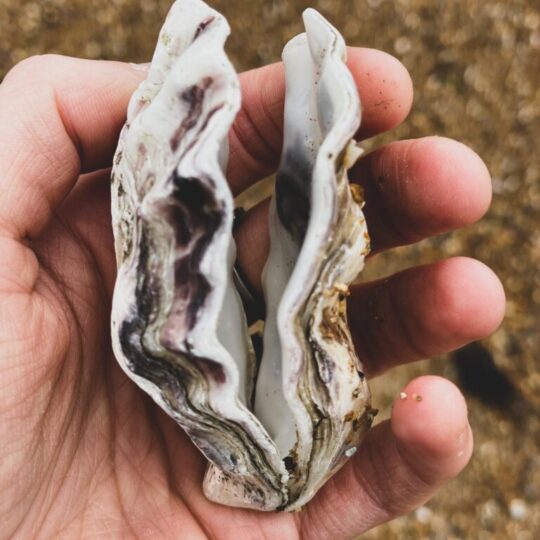
Unit Overview
Why are oysters dying, and how can we use chemistry to protect them?
This unit builds deeper understanding of chemical reactions by exploring reversible reactions through ocean acidification. Students watch case videos, analyze data, and read about how carbon dioxide movement from atmosphere to ocean increases acidity. They consider how oyster die-offs impact communities that rely on them for food, and break the problem into subproblems they can address with chemistry. They figure out how changes in concentration of H+ ions in water leads to changes in water pH., and use chemical reactions and stoichiometry tto determine the amounts of a substance they could use to neutralize acidic water. Students weigh engineering trade-offs, criteria, and constraints to design a site-specific solution for oyster die-offs They apply their thinking in a culminating task on increasing rates of ammonia fertilizer.
*This performance expectation is developed across multiple units.
†This performance expectation is developed across multiple courses.
Performance Expectations:
HS-ESS2-6†, HS-ESS3-4*, HS-ETS1-1*, HS-ETS1-2†, HS-PS1-5, HS-PS1-6, HS-PS1-7, HS-PS1-11 (NYSSLS), *, †
Lesson Set 1: what large and small-scale processes make water more or less acidic?
Lesson 1
What is happening to oysters?
Lesson 2
How can we break down the problem so we can solve it?
Lesson 3
Can carbon dioxide make the ocean more acidic?
Lesson 4
What is it about a substance that determines whether it produces more or fewer H+ or OH- ions when it is added to water?
Lesson 5
How does carbon dioxide move between the atmosphere and ocean systems to cause the water to become more acidic?
Lesson 6
How can acidic water become less acidic again?
Lesson 7
How can we use what we have learned to help protect oysters?
Lesson Set 2: what mathematical models can help us determine the scale of the reactions needed to save oysters?
Lesson 8
How can we figure out how much of a substance we need to neutralize acid?
Lesson 9
How much NaOH would we need to add to make ocean water safe for oysters?
Lesson 10
How does ocean acidification hurt oysters?
Lesson 11
How can we help oysters build shells quickly?
Lesson Set 3: how can engineering design help us determine the best process to save oysters?
Lesson 12
What criteria and constraints do we need to consider when designing solutions to help protect oysters?
Lesson 13
How can we apply our science ideas to develop a solution to help protect oysters?
Lesson 14
How well do our different design solutions address our criteria and constraints?
Lesson 15
How can we apply our learning to other situations?