Unit Overview
How did new ideas and innovation affect Western Europe and Russia starting in the 15th century?
Western Europe and Russia transformed politically, economically, and culturally between 1400 and 1750. This transformation included state building, conflicts, shifts in power and authority, and new ways of understanding the world.
NYS Framework Content Standards
9.02, 9.09
Unit G1.6 Outline
These resources introduce students to the concepts and vocabulary they will encounter in the unit.
Through these resources, students will investigate technologies and ideas, including printing and paper, navigational tools, and mathematics and medical science, that diffused to Europe. Students will also note the role of the Islamic caliphates, explore shifts in the Western European Medieval view of itself and the world as well as key Greco-Roman legacies that influenced Renaissance thinkers and artists, and examine political ideas that developed during the Renaissance, including those of Machiavelli.
Through these resources, students will explore the roles of key individuals, including Martin Luther, John Calvin, Elizabeth I, and Ignatius Loyola, and the impacts that they had on the religious and political unity of Europe, as well as trace the persecution of Jews.
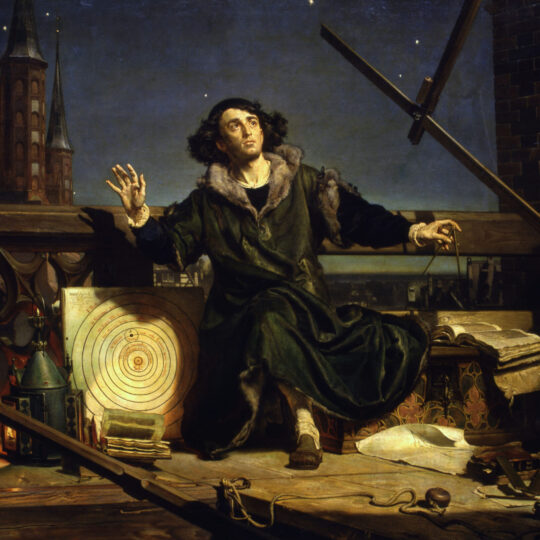
Through these resources, students will examine the Scientific Revolution, including the influence of Galileo and Newton.
Through these resources, students will investigate autocratic and absolutist rule by comparing and contrasting the reigns of Louis XIV and Peter the Great.