Unit Overview
How did the development of agriculture affect the lives of people in early civilizations and their environment?
The development of agriculture enabled the rise of the first civilizations, located primarily along river valleys; these complex societies were influenced by geographic conditions and shared a number of defining political, social, and economic characteristics.
NYS Framework Content Standards
9.01, 9.02
Unit G1.1 Outline
These resources introduce students to the concepts and vocabulary they will encounter in the unit.
These resources introduce students to what it means to “think like a geographer,” provide strategies for reading and interpreting maps, and introduce the geographic context for the Global History course.
Through these resources, students will analyze the political, social, and economic differences in human lives before and after the Neolithic Revolution.
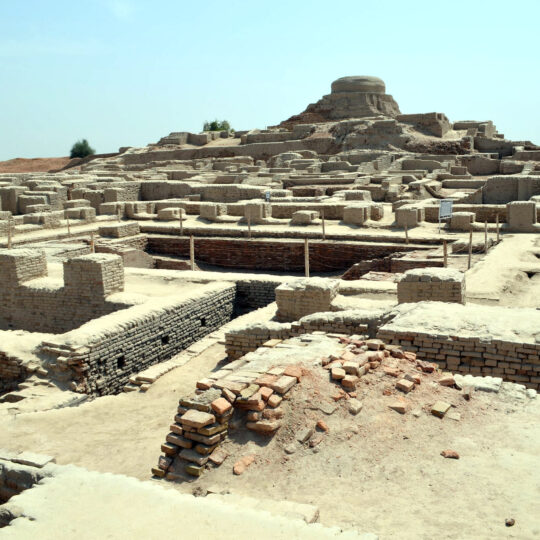
Through these resources, students will explore the Egyptian, Mesopotamia, Shang, and Indus River valley civilizations by examining archaeological and historical evidence to compare and contrast characteristics and explore how those civilizations adapted to and modified their environments to meet their need for food, clothing, and shelter.
This section also introduces students to the concepts of Enduring Issues and contains their first Enduring Issues Check-in.
Through these resources, students will identify the place of origin, core beliefs and practices, and explore the sacred texts and ethical codes of Judaism. Students will examine the effects the belief system had on social order.