Blog
How Small Relational Interventions with “Butterfly Students” Can Rebuild Connection

Continuous Improvement Coach
New Visions for Public Schools
When schools talk about chronic absenteeism, the conversation often focuses on the well-documented negative impact to individual students.
But significant rates of absenteeism also change school culture itself. You can feel it in the building. When large numbers of students are missing school consistently, it affects relationships, routines, classroom energy, the ability to collaborate and facilitate classroom discussion, and the overall sense of community.
Teachers are constantly playing catch-up, reteaching lessons for students who were absent. Students miss key moments of connection with peers and adults. And absenteeism begets more absenteeism. One chronically absent student has a cascading effect on their peers.
As a Continuous Improvement Coach with New Visions for Public Schools, I work alongside a set of New York City public high schools in our Affinity Network to solve system-level problems. After the pandemic, many of the schools I serve in the Bronx experienced chronic absenteeism north of 50 or 60%. At those rates, schools aren’t focused on learning, they’re focused on survival.
That reality shaped New Visions’ recent work piloting and scaling the Butterfly Strategy, a relationship-centered attendance intervention focused on students who are still engaged in school, but quietly slipping into patterns of chronic absenteeism, missing about one day per week across any given 10-week period and really serving as the driving force behind the absenteeism rate schoolwide.
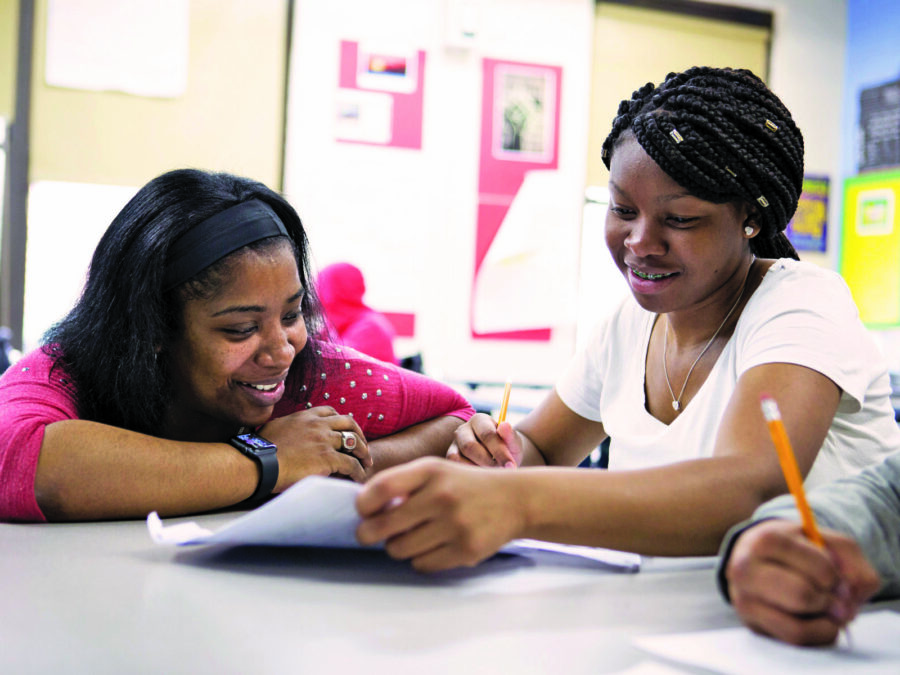
The strategy itself was intentionally simple: weekly check-ins between students and one consistent adult in the building.
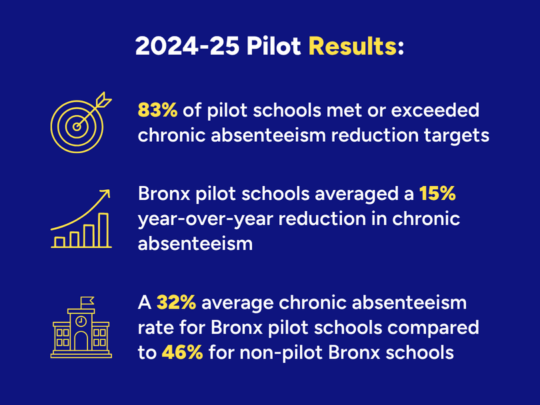
We started with one school, then four schools, then 12 schools, then this past year, 25. And schools discovered the impact extended beyond individual students’ attendance patterns.
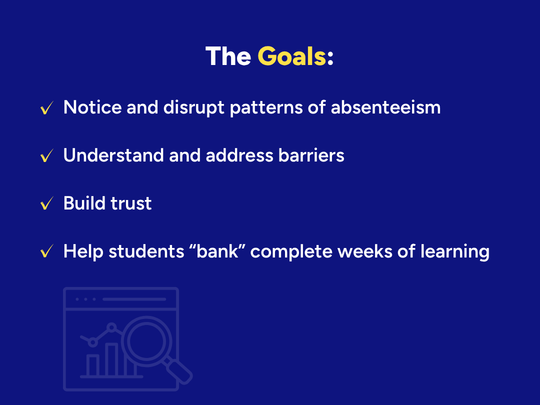
“Butterfly” check-ins include four key elements that change the entire culture of attendance:
- The check-ins start by giving the student a PDF of their attendance snapshot from the Portal by New Visions, which allows the student an opportunity to actually look at their attendance data and verify its accuracy or provide corrections, so all parties have a shared understanding of the foundational data. This sends a powerful signal from the school that we’re not here to surveil or punish; we’re here to support.
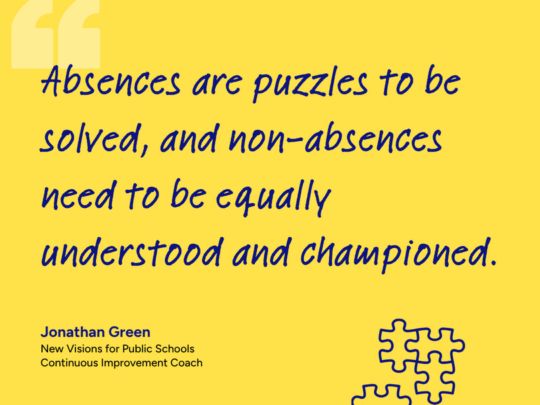
- The adult celebrates in-attendance days, just as much as they probe non-attendance days. I believe absences are puzzles to be solved. Understanding when and why a student does attend can unlock key information about when and why they don’t attend.
- Week by week, the adult asks questions about any absences the week before and helps the student make a proactive plan for the week ahead. The broad label of “chronically absent” often masks root causes, such as weather, transportation, health, or simply normalized habits around attendance – not knowing that one day a week adds up and not realizing that anyone noticed or cared. The weekly check-in keeps the problem manageable and focuses attention on incremental steps that build over time. (Side note: A school week is an accessible unit of attendance data for students to digest and understand. My past efforts at student goal setting against outperforming year-to-date averages, or besting the next 20 days over the last 20 days, fell short because the time span was too long and the averages too abstract.)
- Importantly, the check-ins occur with a staff person – not another student. While offering peer support is not a bad idea, centering the adult-child relationship sends the message from the school that we’re serious about attendance. We notice, we care, and we’re going to fight for you to attend.
Across the pilot schools, students started to feel like adults noticed them, cared whether they were there, and understood on an individual basis what was getting in the way.
When students experience school as a place where people are genuinely paying attention to them, they respond differently.
The pilot reinforced an important lesson: small relational practices, implemented consistently, can have system-wide effects.
The Affinity Network structure – a longstanding public-private partnership between a set of New York City high schools and a nonprofit learning partner – along with citywide access to the Portal, allows these types of grassroots innovative strategies to take root and spread.
Read more about the Butterfly Strategy and the lessons schools learned through the pilot:
- A Strategic Approach to Tackling Chronic Absenteeism
- Reducing Chronic Absenteeism: Year 1 Pilot Shows Promising Outcomes
- Getting Set to Tackle Chronic Absenteeism
- Reversing the Trend: A Data-Driven and Human-Centered Approach to Student Attendance
- The Butterfly Strategy: A Powerful Approach to Chronic Absenteeism
(my publication with High Tech High Graduate School of Education)